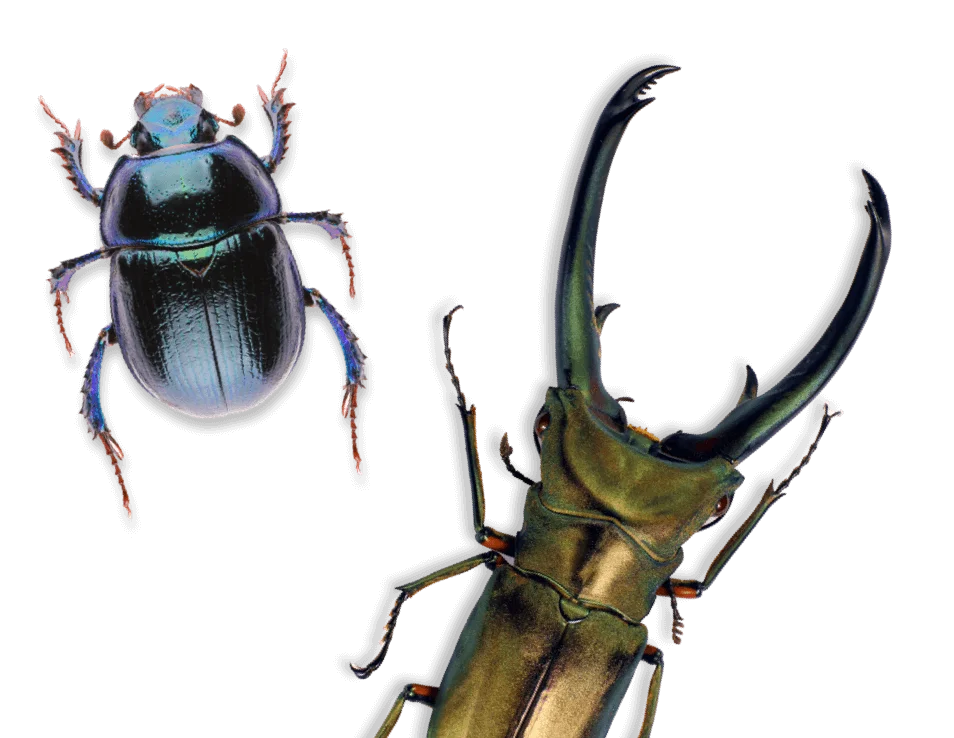
Walk through your local park, and you might notice a woodpecker tapping overhead, wildflowers growing beside the trail, or a turtle resting on a log. Other life is easier to miss: fungi growing beneath fallen leaves, insects tucked into tree bark, and mussels living on a streambed.
Together, these organisms are part of the area’s biodiversity: the variety of all living things on Earth. Or, in other words, the unique life that makes each place what it is.
The word biodiversity might bring to mind less familiar landscapes, such as a tropical rainforest or coral reef, but it belongs just as much to Ohio’s forests, wetlands, rivers, and backyards. Understanding it helps us see familiar places differently—and recognize why they’re worth protecting.
What are the different types of biodiversity?
Biodiversity includes much more than the number of species in a place. Scientists define biodiversity at three interconnected levels: genetic diversity, species diversity, and ecosystem diversity.
Genetic diversity means inherited differences among members of the same species. Two oak trees may belong to the same species but not be genetically identical. Those differences can influence how each responds to disease or changing conditions.
Species diversity refers to the different kinds of living things in an area, including plants, animals, fungi, and microorganisms.
Ecosystem diversity describes the variety of natural systems across a landscape, such as a prairie, a forest, a wetland, or a stream. Each ecosystem includes living things interacting with one another and with their physical surroundings.
These aren’t simply different categories. These levels depend on one another to thrive, and each is important. Protecting a species requires attention not only to the animal or plant itself, but also to the habitat and relationships that sustain it.
Why biodiversity matters to us
The next time you eat a delicious meal, you might be enjoying the benefits of biodiversity. Pollinators, such as bees and butterflies, help many of the crops we eat produce fruits and seeds. Beneath our feet, decomposers such as fungi, earthworms, and tiny organisms break down organic material and return nutrients to the soil. Wetlands help improve water quality and store floodwater. Scientists often call these benefits “ecosystem services,” a term that describes the many ways functioning natural systems support our lives.
But these relationships matter to more than just humans. Plants provide food and shelter to wildlife, while animals carry pollen and seeds, helping plants reproduce. Predators help to regulate prey populations, while decomposers recycle the nutrients that support new growth. Losing one species can affect others, especially when it plays a role that few others can fill.
Biodiversity also provides options when conditions change. Genetic variation within crops, for example, can help farmers respond to pests, diseases, and a changing climate. Losing that variation can make food production more vulnerable. And in nature, differences among and within species can even make ecosystems more resilient to change. Our planet’s ecosystems absorb more than half of all greenhouse gases produced by humans, absorbing excess carbon dioxide and protecting against a warming planet.
As biodiversity declines, our world risks losing more than individual species. Food networks may unravel, habitats can become less resilient, and natural systems are less able to maintain healthy soil, clean water, and store carbon. These changes can threaten our food supply, peoples’ livelihoods, and the well-being of communities.
Biodiversity matters in less measurable ways, too. It shapes the places where we walk, play, watch birds, and find a little quiet. And it improves the lives of other living things, which have value beyond what they provide for us. Protecting biodiversity means protecting both the life-sustaining systems humans depend on and the extraordinary variety of life itself.
A Museum conservationist fights the invasive species Phragmites at Mentor Marsh, where it previously crowded out native plants.
What puts biodiversity at risk?
Biodiversity faces several pressures, often at the same time. A major international scientific assessment identified five leading direct drivers of biodiversity loss: changes in land and sea use, overexploitation, climate change, pollution, and invasive species.
On land, habitat change can mean draining a wetland, clearing a forest, or dividing a natural area with roads and development. Overexploitation occurs when organisms are harvested faster than their populations can recover.
Pollution can damage the water, soil, and air that living things depend on, while climate change alters environmental conditions. Invasive species, or organisms introduced outside their native range that cause harm, can add further pressure.
These threats rarely occur one at a time. A species or population already struggling with a damaged habitat may also have to cope with polluted water or an invasive competitor.
Examples close to home: biodiversity loss in Ohio’s wetlands and mussels
Ohio’s wetlands offer a striking example of habitat loss. According to Ohio EPA, the state has lost about 90% of its historic wetland resources. Draining, filling, and modifying wetlands has changed both the amount of habitat available and how these systems function.
For wildlife that depends on wetlands, losing habitat can mean losing places to feed, shelter, and reproduce. For people, it can mean losing some of the landscape’s capacity to store floodwater and improve water quality.
Beneath the surface of Ohio’s rivers, native freshwater mussels face another combination of threats: pollution, sediment buildup, habitat loss, and competition from invasive mussels. Mussels are not only a key indicator of water quality, but also help to improve it. According to the Ohio River Foundation, one mussel can remove pollutants from up to 10 gallons of water per day. Despite this, mussels are among the most endangered groups of species on Earth. In 2023 alone, the U.S. Fish and Wildlife Service declared eight species of freshwater mussels extinct.
Their lives reveal just how connected biodiversity can be. Native mussel larvae depend on host fish during their development. Protecting mussels, then, also means paying attention to fish and the conditions both need to survive. Without them, we lose one of nature’s most efficient combatants of pollution. This loss is a tragedy for not just their species, but also their habitats, ecosystems, and the others who depend on them—including us.
Museum staff and volunteers perform conservation work at Singer Lake Bog, one of the Museum's natural areas.
How conservation can protect biodiversity
Losing Earth's biodiversity isn’t inevitable. With human activity as the leading driver of biodiversity loss, our actions to combat it are more important than ever. Conservation, or the care and stewardship of Earth’s natural resources, is the act of protecting and managing nature so that species, habitats, and ecological relationships can persist. The Cleveland Museum of Natural History puts that work into practice through habitat protection, restoration, research, and education.
The Museum’s Natural Areas Program protects nearly 13,000 acres across northern Ohio, including forests, wetlands, and other native ecosystems. Protecting these places helps preserve not just individual species, but the relationships among plants, animals, and their habitats.
A new preserve the Museum acquired last year is a direct example of how conservation can protect biodiversity. Habitats in the Grand River Terraces Preserve at the mouth of Bronson Creek support 11 different species of freshwater mussels, including the federally threatened Round Hickorynut Mussel. The protection of this habitat will help secure the long-term viability of this important freshwater mussel population.
At Mentor Marsh State Nature Preserve, the Museum and its partners are helping a damaged ecosystem recover. Salt pollution destroyed much of the marsh’s native vegetation, and the invasive grass Phragmites spread into dense stands. Our restoration efforts have focused on controlling those reeds and reestablishing native plants. Recovering wetland habitat supports biodiversity, including birds, fish, amphibians, and other wildlife—a reminder that restoring plant communities can benefit an entire web of life.
Education offers another, less direct way to support conservation. Projects such as the National Geographic Photo Ark, on view at the Museum from November 19, 2026–March 28, 2027, bring people face-to-face with the importance of biodiversity and conservation. The exhibition connects photography, specimens, and science to help people understand biodiversity and why protecting it matters, encouraging the awareness and support that conservation depends on.
Together, protecting natural areas, repairing damaged habitats, and helping people understand what is at stake offer important ways to care for biodiversity.
A place for all of us
You don’t need to be able to identify every bird or understand every ecological relationship to care for biodiversity. Growing plants native to your area, helping to stop the spread of invasive species, supporting wildlife in your own backyard, and supporting organizations that work to protect habitats are useful places to start.
Individual choices complement the work of scientists, conservation organizations, landowners, and public agencies. Together, those efforts can help protect the places we know—and the life we have yet to discover.