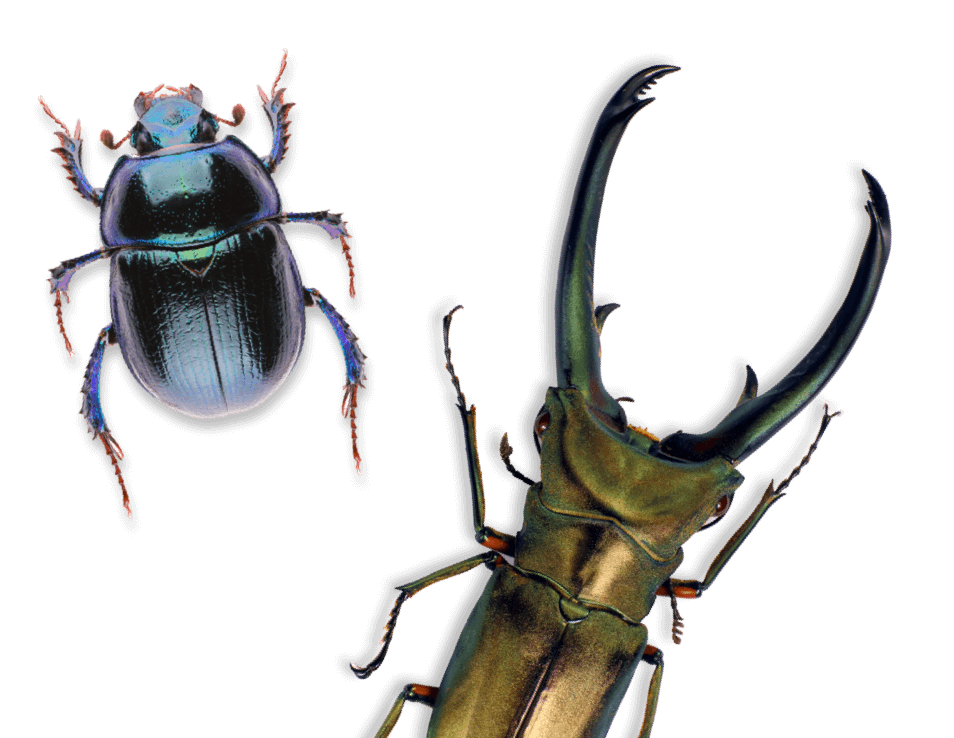
Inhabitants of a Unique Island Ecosystem
Below are some of the species (and geological features) found at Scheele Preserve on Kelleys Island. This preserve is known for its unique Lake Erie island habitats, including alvar shrubland, forest, shrub swamp, and shoreline, and is home to unique plant and animal species, many globally rare.
Scheele Preserve is stewarded by the Cleveland Museum of Natural History through its Natural Areas Program, which protects more than 12,500 acres across Northern Ohio. Explore the species below, learn more about Scheele Preserve, or dive deeper into the Natural Areas Program.
Alvar limestone bedrock
Alvars are horizontal exposures of nearly barren limestone that were exposed by glaciers. The alvars on Kelleys Island are kept open by wind, waves, and ice—and, at Scheele Preseve, foot traffic.

Balsam squaw-weed
Packera paupercula
A low, clumping perennial with bright yellow, daisy-like heads in spring. It thrives in thin soils and seasonally moist pockets on alvars, where its early blooms supply nectar for emerging bees and butterflies.

Blackburnian warbler
Setophaga fusca
The male Blackburnian warbler has a striking orange throat, and both sexes have a thin, pointed bill used for catching insects. These small migrants use mature deciduous and mixed forests on islands as stopover feeding sites during spring and fall migration.

Blue ash
Fraxinus quadrangulata
Blue ash is a medium-sized deciduous tree with opposite, compound leaves and distinctive diamond-patterned bark. It tolerates dry, limestone-based soils. Older trees provide good perching and nesting habitat for birds. Although somewhat less susceptible than other ash species like black ash and green ash, blue ash is nevertheless threatened by the invasive emerald ash borer.

Bombardier beetle
Brachinus sp.
This small ground beetle ejects a defensive chemical spray when disturbed. It shelters under stones and in fissures of alvar pavement and feeds on other insects.

Chinkapin oak
Quercus muehlenbergii
Chinkapin oak is a medium-sized, drought-tolerant oak with toothed leaves. It commonly grows on well-drained limestone soils and supports many native insects and birds; its acorns are an important food source for wildlife.

Eastern fox snake
Pantherophis vulpinus
A nonvenomous, fairly large constrictor with a patterned brown-and-yellow body, the eastern fox snake is an excellent swimmer and climber. Its use of open, sunny areas for basking and nearby wetlands for foraging makes alvars valuable habitat for the snake.
Read more about the eastern fox snake.

Eastern red cedar
Juniperus virginiana
A drought-tolerant pioneer species, eastern red cedar commonly colonizes disturbed or open sites, where its extensive root system can help stabilize soils. Its dense foliage provides shelter for birds, for whom its "berries"--actually modified seed cones--are an important food source.

Giant swallowtail butterfly
Heraclides cresphontes
The giant swallowtail is North America’s largest butterfly. A strong flier with bold, black-and-yellow markings, adults contrast markedly with caterpillars, which resemble bird droppings. Caterpillars feed on wafer ash, among other native plants, while adults nectar on a variety of flowers.

Glacial grooves
The glacial grooves on Kelleys Island were created by the slow, scraping movement of glaciers across the relatively soft limestone that makes up the bedrock of the island.
The grooves on Kelleys Island are some of the most impressive in the world. You can find more information about visiting them here. You can also find more information about the geology of the island here.

Gray tree frog
Dryophytes versicolor
The gray tree frog is a small, arboreal frog that can change color to match its surroundings. Often found in trees and shrubs, it breeds in vernal pools and wetlands in spring and early summer. It uses its sticky toe pads to climb vegetation.

Green milkweed
Asclepias viridis
Green milkweed is a modest-sized milkweed adapted to dry, open sites and shallow soils. Its pale greenish flowers are an important food source for native bees and other pollinators, including monarch butterflies.

Hackberry emperor butterfly
Asterocampa celtis
The hackberry emperor is a medium-sized butterfly with brown, irregular wing markings. They are locally common where hackberry trees, the butterfly's host plant, grow. Adults lay eggs on hackberry trees and feed on the sap; caterpillars feed on hackberry buds and leaves.

Hackberry Tree
Celtis occidentalis
Hackberry is a medium-sized tree with distinctive corky, ridged bark. Its small, sweet fruits are eaten by birds and mammals. It will tolerate a range of conditions, but prefers soils high in limestone, as at Scheele Preserve. Hackberry supports specialist butterflies such as the hackberry emperor.

Horn coral fossil
The bedrock of Kelleys Island is composed primarily of Columbus Limestone, which was deposited during the Middle Devonian Period (about 400 million years ago) when the area was covered by a shallow, warm sea. The Columbus Limestone is highly fossiliferous, and you can easily find evidence of corals, brachiopods, crinoids, and trilobites in exposed rocks. Some of the most common Devonian fossils are rugose corals, also known as horn corals. Often mistaken for teeth, these extinct corals were solitary corals, but would have been important reef builders. They provide vital clues as to what life was like during the Devonian.

Kidneyshell mussel
Ptychobranchus fasciolaris
The kidneyshell is a medium-sized freshwater mussel that lives buried in stream and lake bottoms. It filters water as it feeds, and its presence indicates good water quality. Many mussel populations have declined due to habitat loss and water pollution.

Lake Erie watersnake
Nerodia sipedon insularum
A subspecies of the common watersnake (Nerodia sipedon), the Lake Erie watersnake (Nerodia sipedon insularum) is a stout, nonvenomous snake that feeds mainly on fish and amphibians. Once federally threatened, many island populations have recovered after targeted conservation actions. Alvar shorelines and adjacent rocky ledges are their favored sunning spots.

Lake sturgeon
Acipenser fulvescens
Lake sturgeon is a very large, long-lived, bottom-feeding fish with rows of bony scutes and sensory barbels around its mouth that it uses to find prey. Historical populations in Lake Erie declined sharply, and ongoing restoration and reintroduction efforts focus on restoring this species to suitable nearshore habitats. Sturgeon benefit from the intact shoreline and shallow-water habitats of Kelleys Island.

Muskingum sedge
Carex muskingumensis
Muskingum sedge is a clump-forming sedge with tall, arching leaves and seed spikes in summer. On alvars, it occupies low pockets and seasonal seeps. In these damp microhabitats, its roots help stabilize soils and its foliage provides cover for wildlife.

Northern saw-whet owl
Aegolius acadicus
The northern saw-whet owl is a small nocturnal owl with large yellow eyes and a high-pitched, tooting call. It often visits Kelleys Island during migration or in winter. On the island, it uses cedar thickets and dense mixed woodlands for roosting and shelter.

Philadelphia panicgrass
Panicum philadelphicum
Philadelphia panicgrass is a warm-season native grass with a clumping habit. It grows in sandy or thin-soil openings and colonizes disturbed fissures on alvars, where it helps stabilize small soil pockets.

Red ash
Fraxinus pennsylvanica
Red ash (also called green ash) is a fast-growing, medium-sized ash species of lowland and floodplain sites. It has compound leaves and winged seeds (samaras) in autumn. It is highly susceptible to emerald ash borer, which has greatly reduced local populations.

Rock elm
Ulmus thomasii
Rock elm is a medium- to large-sized elm tree with rough-textured leaves and durable wood that prefers well-drained, limestone-derived soils. Less common than other elms, it can occur on island uplands and supports many invertebrates and birds. Like other elms, rock elm populations have been impacted by Dutch elm disease.

Rough-leaved dogwood
Cornus drummondii
Rough-leaved dogwood is a shrub or small tree with coarse-textured leaves. Its white flower clusters in late spring are followed by white berries—an important food source for birds. It tolerates dry, sunny sites, and its dense growth patches provide important nesting sites and cover.

Sandbar willow
Salix exigua
Sandbar willow is a slender shrub with narrow leaves and catkins that commonly colonizes sandy shorelines and disturbed areas. Important for stabilizing dunes and providing early successional shrub habitat on Lake Erie beaches, it also supports many insects and nesting songbirds.